This is a featured guest post by Kaashvi Kasera, a student at Oakton High School. Kaashvi is a member of the Environmental Club at her school and is currently working on her Girl Scout Gold Award.
Fall is here and with it, a high demand for rakes. But before you grab yours, let’s pause to consider: how beneficial is raking really? What impact does it have on the environment that often goes unnoticed? Those fallen leaves might seem like messy, brown clutter, but they’re far from waste. In fact, they play an important role in supporting nature right in your own backyard.
A layer of leaf litter covering the ground. Image credit: Clean Fairfax
Fallen leaves are more than just yard clutter. They’re vital homes for wildlife like fireflies, moths, butterflies, and countless other insects. There’s no need to shred or remove them; creatures such as roly-polies and leaf-eating bugs naturally break down the leaves for you, enriching the soil in the process. So skip the shredding— nature already has its own cleanup crew.
A millipede that helps break down the leaves for us. Image credit: Clean Fairfax
Lastly, let’s take a look at two specific examples of wildlife and what important life processes are happening beneath the leaves. The National Wildlife Federation mentions the mourning cloak butterfly. These mysteriously named insects, cloaked in velvet and black, are known for their hibernation habits. Fallen leaves provide insulation, especially when colder temperatures arrive. Stay tuned, because this next fact may surprise you. The National Wildlife Federation states that when butterflies hibernate in the leaves for the winter in order to conserve their energy, they can endure temperatures as cold as -76 degrees Fahrenheit!
Next, the Luna moth, often considered one of North America’s most beautiful moths, depends on fallen leaves. Within the leaf litter, these moths will pupate, or develop into a pupa. They will use the leaves to create their cocoons. Additionally, Luna moths have a short lifespan, and the majority of their time as an adult is spent reproducing. By conserving their energy underneath leaves, Luna moths are able to stay healthy during harsh winter conditions allowing them to find mates and lay eggs efficiently.
A luna moth. Image credit: Clean Fairfax
This year, we hope you’ll consider leaving the leaves in your yard! You can rake them into garden beds or piles in your yard to clear walkways and benefit the local ecosystem right outside your window.
Remember that if you must remove the leaves, they belong in paper yard waste bags, never in plastic, to ensure they get properly composted. Check with your hauler to find out when yard waste pickup is.
The holiday season is a time for giving, festive celebration, and connection with those we love. And this year, let’s make it a season of sustainability too! By shopping thoughtfully, we can spread joy while caring for our planet. Here are some easy ways you can make your holiday gifting more meaningful and eco-friendly.
Shop Locally and Sustainably
Supporting local businesses not only strengthens our communities but also reduces the environmental impact of shipping. Look for unique, locally made items or eco-conscious brands that prioritize sustainable materials and ethical practices. Your gift can tell a story while supporting artisans and small businesses. 🎄
Rethink Wrapping
Wrapping paper may look festive, but much of it isn’t recyclable. Instead, get creative with sustainable alternatives! Use recyclable wrapping paper, old newspapers, brown kraft paper, or natural materials like cloth wraps or twine. You can also reuse gift bags, boxes, and bows from years past to further cut down on waste. 🛍️
Give with Purpose
The best gifts are the ones that will be used and loved. Before buying, consider whether the item fits the recipient’s needs, style, or interests. Practical gifts, experiences, or consumables like homemade treats are thoughtful ways to show you care—without the risk of your gift ending up in a landfill. 🌍
To help you find inspiration, we’ve assembled a few holiday gift guides full of locally sourced, sustainable, and practical gift ideas for everyone—from the home chef, to the coffee or tea-lover, and the R&R enthusiast. We also encourage you to check out this recent presentation we gave on Sustainable Holidays earlier this season.
Happy Holidays!!
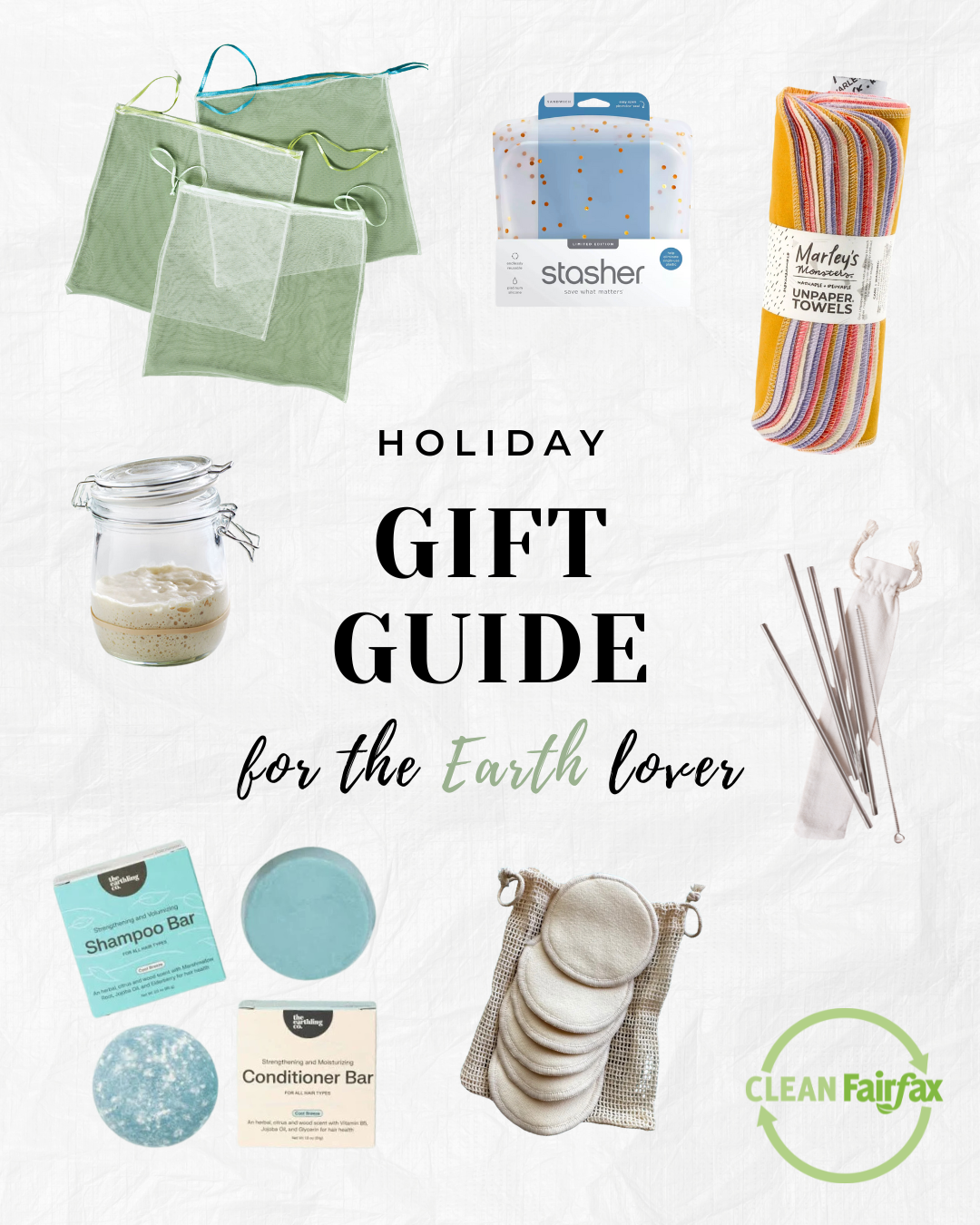
Gift the home chef these kitchen items that are effective and sustainable too! From compost containers, to reusable paper towels, refillable soaps, a CSA subscription, and even sourdough starter!These reusables can level up the home barista’s coffee game! Locally roasted beans, home brew equipment (no pods required), reusable straws, mugs to take on the go (or to the coffee shop), and compost container for used grounds!The self-care enthusiast or homebody on your list might appreciate these low-waste gifts—try toothpaste tablets, reusable cotton rounds, bar shampoo and conditioner, or even a gift card to a local sustainable shop!
Welcome back to our Sustainability Spotlight series, where we celebrate businesses, organizations, and individuals making a significant impact on sustainability. This month, we’re excited to highlight Fillagreen, a local gem in the City of Manassas, VA, that is redefining the way we shop by promoting a low to no-waste, sustainable lifestyle.
The Heart of Fillagreen: Sustainable Goods & Refills
Fillagreen is not just a store; it’s a movement! Offering a carefully curated selection of eco-friendly products and a refill station, the shop empowers the local community in Manassas – and now Fredericksburg, at their newly opened second location – to reduce waste and make mindful, sustainable choices in their daily lives.
Fillagreen’s flagship store is located in downtown Manassas, VA.
What makes Fillagreen stand out?
Zero-Waste Shopping: Fillagreen is dedicated to helping customers reduce their reliance on single-use plastic by offering a variety of bulk goods. Whether it’s skin and beauty products, toiletries, or household cleaning products, the store encourages shoppers to bring their own containers to refill, thus cutting down on packaging waste. But don’t worry, if you forget your container at home, Fillagreen offers containers for sale as well as a free container library (just remember to bring your container next time!). Similar to other low waste stores in our region, this model helps foster sustainable habits by bringing high-quality products direct to consumers, making it extremely easy to reduce, reuse, and refill all their products.
Eco-Friendly Products: Fillagreen’s product selection features a range of sustainable goods, from reusable bags and water bottles to bamboo toothbrushes and organic cleaning supplies. They also feature self-care and beauty products, such as shower steamers, tinted lip balm, perfumes, lotions, aftershaves, and more! Yet even with such a variety of products, every item is thoughtfully chosen with an emphasis on minimizing environmental impact and promoting ethical production.
Personalized Local Touch: Fillagreen is community-focused with a presence at two local farmers markets (Haymarket and Historic Manassas), and they also offer doorstep refill exchange and delivery for anyone within a 10 mile radius of their store. Customers can also subscribe to an “Earthwise Surprise Subscription Box,” which delivers an exciting selection of eco-friendly goods each season throughout the year. The staff are eager to help customers try out the refill system, give product recommendations, and provide personalized curbside service – this level of attention can only be found at a local, small business!
Educational Focus: Beyond being a retail store, Fillagreen serves as a community hub for sustainability education. The team regularly hosts events and shares information that empowers local residents to take action on environmental issues. Fillagreen staff will speak at community groups, events, and schools about sustainability and eco-friendly lifestyle choices to build the zero waste movement.
The refill station at Fillagreen’s Manassas shop. Customers may bring their own container, purchase, or borrow a container from the Free Jar Library to fill up with soaps, detergent, shampoo, lotion, and more products.
The tare station where customers weigh their refill products.The running count of “containers refilled instead of landfilled.”
How Fillagreen Is Shaping a Sustainable Future
Fillagreen is playing a crucial role in the Manassas and Fredericksburg communities by demonstrating that sustainability doesn’t have to be hard or complicated. By offering an accessible and welcoming space to shop sustainably, they are inspiring customers to take simple but meaningful actions toward reducing waste. In doing so, Fillagreen is not only helping individuals live more sustainably but is also contributing to the larger global movement toward a circular economy.
A Commitment to the Community
At Fillagreen, sustainability isn’t just a buzzword – it’s woven into the fabric of their business. The store is committed to fostering a sense of community and collaboration, and they are deeply invested in creating a space that encourages environmental stewardship. Whether you’re a longtime advocate for sustainable living or just starting your green journey, Fillagreen offers the resources and support you need to make a difference.
Why It Matters
As the demand for eco-conscious products continues to grow, businesses like Fillagreen are showing that sustainability can be both practical and stylish. By reducing packaging waste, supporting ethical production, and offering eco-friendly alternatives, Fillagreen is helping pave the way for a greener future.
Fillagreen’s commitment to sustainability proves that even small businesses can have a large impact! And by supporting companies that prioritize the planet, we all play a role in building a more sustainable and resilient future for generations to come.
Holiday gifts and decor made with natural materials and no plastic packaging make thoughtful gifts for the holidays!
Visit Fillagreen: Fillagreen is located in the heart of downtown Manassas, VA (with a second location recently opened in historic Fredericksburg, VA). If you’re in the area, be sure to stop by and explore the store’s incredible range of sustainable products. You can also check out their website and social media pages for updates on new products, events, and sustainability tips. Let’s keep the momentum going! We’ll continue to spotlight businesses, organizations, and individuals who are leading the way in sustainability – and we hope that Fillagreen’s example inspires you to take your own steps toward a more sustainable future.
The holiday season is a time of joy, celebration, and gift-giving. But amidst the festivities, it’s important to consider the environmental impact of our choices–from the items themselves, to their packaging, transport, and eventual disposal. Sustainable gift giving is not only a responsible way to celebrate the holidays, but also a meaningful way to express your love and thoughtfulness for the people in your life and the planet we all call home! In this guide, we’ll explore some ideas for sustainable holiday gift giving that align with eco-friendly values.
1. Experiences Over Things:
Consider giving the gift of experiences instead of material possessions. Tickets to a concert, an art or cooking class, or a weekend getaway not only create lasting memories but also minimize the carbon footprint associated with the production and disposal of physical items. In Fairfax County, we are fortunate to be situated close to city attractions, charming historic towns, the outdoors and adventure escapes, and a breadth of cultural and culinary experiences–we encourage you to look locally at all that our great region has to offer!
2. DIY and Upcycled Gifts:
Tap into your creative side by making DIY gifts or repurposing items you already have this season! Handmade candles, personalized recipe books, thrifted or upcycled clothing can all be thoughtful and unique presents that demonstrate your dedication to sustainability. It’s a win-win!
3. Give the Gift of Time: Offering your time can be one of the most meaningful gifts. Volunteering for causes that improve your community is truly a gift that keeps giving! Alternatively, creating personalized “coupon” books with offers for things like a home-cooked meal, a day of babysitting, or a garden makeover not only reduces consumption, but strengthens relationships.
4. Support Local Artisans:
Whether it be at the farmers market, craft & artisan fairs, brick & mortar shops, or online, we are big fans of supporting local makers and small businesses. Handcrafted items often have a smaller environmental impact compared to mass-produced goods, plus a lower transportation cost to get to you. Whether it’s a piece of jewelry, pottery, artwork, or baked goods and craft beverages, you’re not only giving a unique gift but also supporting the local economy.
5. Eco-Friendly and Sustainable Products:
When shopping for items to give, opt for gifts that prioritize sustainability. Look for items made from recycled or organic materials, such as bamboo utensils, reusable straws, bags, and containers or eco-friendly clothing. Use your power as a consumer to support brands and products from companies that are committed to ethical and environmentally friendly practices. Moreover, be conscious of product packaging and when you can, skip the bag!
To help get the sustainable gifting going, we’ve put together a handy gift guide featuring some of our favorite gift ideas from environmentally-friendly cleaning products, to reusables, at-home composting, produce gifts and more!
Reusable produce bags: perfect for the farmers market and the produce section at the grocery store!
Reusable sandwich and snack bags: such as these from Stasher.
Countertop compost bin & compostable bag can liners: The EPA estimates that food constitutes as much as24% of our municipal solid waste, composting can help divert and reduce some of that waste as well as return valuable nutrients to the soil! Many brands offer countertop bins, such as this one from Utopia Kitchen, which is a convenient and simple way to get started. If you have a curbside collection service or local dropoff option, be sure to grab some compostable can liners too (TIP: look for certification seals on bags such as the BPI certification. Certifications ensure that products are actually compostable at commercial composting facilities, but they do not necessarily mean bags will break down in backyard compost piles).
Swedish dishcloths: replace paper towels with this washable, absorbent cloth!
Eco-friendly cleaning products, concentrates and refillables: companies like Blueland, Grove, and the Zero Waste Store offer a variety of home cleaning products, oftentimes with minimal packaging and easy concentrates to refill your bottles at home.
Reusable containers and bento boxes: perfect for meal prep, lunch boxes, leftovers, and even carryout from your favorite restaurant! There are many plastic options on the market, though we love lightweight metal ones for their durability and ease of travel. Glass containers are also great options for at-home. Check out these options from ECOlunchbox and black + blum!
Reusable straws and utensils: glass, metal, and bamboo all make durable alternatives for these common single-use plastic items.
Community-Supported Agriculture (CSA) memberships: support local farmers by gifting or subscribing to a CSA program! In exchange for your membership “share” you receive a box of seasonal produce or other farm goods throughout the farming season–perfect for the home chefs and foodies in your life! Explore CSA programs near Fairfax County here.
Refillable and low-waste stores. We are lucky to have twolow-waste stores offering sustainable items, bulk goods, and refills on products like soap, shampoo, cleaning products, etc. in Fairfax County: Trace – Zero Waste and Virginia Mercantile. Some organic grocery stores (e.g., Whole Foods, MOM’s, Fresh Market) also have bulk food sections and carry refillable products, so be sure to check out the locations near you–and bring a container!
6. Charitable Donations:
In lieu of traditional gifts, make a donation to a charitable cause in the recipient’s name. Choose organizations that align with their values, whether it’s environmental conservation, education, or healthcare. This thoughtful gesture contributes to positive change in the world.
7. Reusable Wrapping and Packaging: Extend your commitment to sustainability by using reusable gift wrap or fabric gift bags. Traditional wrapping paper is often not recyclable, contributing to unnecessary waste. Be creative with your packaging, using newspapers, fabric, or existing containers to add a personal touch.
This holiday season, let’s embrace the spirit of giving in a way that respects our planet. Sustainable gift giving is not only environmentally responsible but also is an opportunity to inspire others to make conscious choices. By prioritizing experiences, supporting local businesses, and choosing eco-friendly products, we can create a holiday season that reflects our commitment to a more mindful & sustainable way of living. Let’s celebrate the joy of giving while leaving a positive impact on the Earth for future generations!
The Verdict: Ultimately, if you’re looking for the most sustainable way to celebrate your holiday, real trees are the way to go. However, there are certainly pros and cons to real and artificial trees–we break them down in more detail here:
The Life Cycle & Environmental Impact of Christmas Trees In terms of sustainability and life cycle, natural (“real”) trees are the clear winner. There is a common misconception that Christmas tree harvesting is detrimental to the environment, which might encourage some folks to opt for a plastic tree which they can reuse year after year. It’s true that the environmental impact of tree farming is complicated–it depends on factors like transportation methods and distance, how trees are watered, and what types of fertilizers or chemicals are used to grow them (Hubbard, 2022)–but according to the National Christmas Tree Association (NCTA), “Real Christmas Trees are a renewable, recyclable, natural product grown on farms throughout North America” (NCTA, 2022). The association emphasizes that trees are not cut down from the forest, but in fact “grown as crops, just like corn or wheat, and raised on a farm. Once they are harvested, new seedlings are planted to replace [them], whereas fake Christmas trees “are a non-renewable, non-biodegradable, plastic and metal product most often made in overseas factories” (NCTA, 2022).
When considering all aspects of their life cycle, many experts believe that artificial Christmas trees actually have a greater negative impact on the environment (Brown, 2017). For example, “In the U.S., around 10 million artificial trees are purchased each season. Nearly 90 percent of them are shipped across the world from China, resulting in an increase of carbon emissions and resources” (The Nature Conservancy, 2019). According to Lienna Hoeg, a Christmas tree specialist in Nova Scotia, “Not many people are aware that for every one acre of Christmas trees, daily oxygen can be produced for 18 people. If you use or purchase an artificial tree, you’d have to use that tree for 20 years for it to have the same environmental impact as one natural Christmas tree” (Hubbard, 2022). Moreover, most artificial trees are manufactured from metal and polyvinyl chloride (PVC), petroleum-derived plastic which often contains phthalates harmful to human health (Wang, 2020). On average, an artificial tree will last 5-7 years, meaning it will eventually need to be replaced. With limited reuse options, artificial trees are often landfilled, where, due to their non-biodegradable, non-recyclable PVC material, they will remain for centuries after disposal (Brown, 2017).
Accessibility of Christmas Trees While it might be the more sustainable option, purchasing a real Christmas tree is not always the most accessible for those wishing to deck the halls. Location, urban density, space limitations, storage concerns, tree maintenance and disposal, and rising costs are just a few of many considerations that go into the purchase decision of a real or artificial tree. For example, for older people or those without the capacity to carry and install a real tree, an artificial tree may simplify their holiday setup. Likewise, artificial trees come in a variety of shapes and sizes, as well as pre-lit selections, which again offers convenience and flexibility for some consumers. Furthermore, artificial trees offer an alternative solution for consumers who live far from Christmas tree farms or do not have the means to transport a real tree back home with them. As far as access to real Christmas trees, in addition to local parking-lot tree sales, trees at home-improvement and big box stores, and tree farms themselves, there are numerous companies across the country who offer tree delivery services for an additional price.
The New Wave of Christmas Trees If you really want to step up your sustainable game for the holiday season, check out a potted tannenbaum. Multiple companies around the U.S. are renting out real Christmas trees, a trend which is growing in popularity. Here’s how it works: consumers can order trees online (where they may browse different species, heights, and prices), the company delivers the potted trees to homes or businesses, and the consumer simply cares for the tree according to the instructions of the rental company. Often, there is a timeline for rental (e.g., 30 days), after which the potted trees are picked up or returned back to the company’s nursery to continue growing until the next holiday season (Hubbard, 2022; Shea, 2021). Cost wise, Christmas trees range in price but are generally comparable to a cut real tree, though without the wasteful disposal at the end of the season. Instead, potted trees offer a sustainable life cycle of growth, rental, return, repeat, and “after about seven years, when the trees are too large for rental, they are planted in the ground” (Platt, 2019). The feel-good factor consumers receive from nurturing a live tree, which will ultimately help to reforest and beautify our lands, is a considerable perk for those looking to make their holiday a little more sustainable!
Today, there seems to be no shortage of options when we browse the aisles of cleaning products at our local stores. But with so many options and flashy marketing, how does the eco-conscious consumer know what products are truly “green”?
“Greenwashing” is a popular marketing strategy employed to make products, or companies, seem more appealing to the conscientious customer base. Terms such as “green,” “natural,” “plant-based,” “non-toxic,” “eco-friendly” and similar buzzwords may catch the eye of well-intentioned individuals who prefer to support environmentally-conscious brands. However, just because products contain one or more of these labels, it doesn’t necessarily mean that they are entirely sustainable or safe. Which is why it is important to read the labels and to think about what qualities of a cleaning product are important to you – do you want a product in less plastic packaging? A biodegradable, non-toxic product? A plant-based product?
Understanding what goes into your product and what to look for on a label can be helpful in making an informed, eco-conscious decision when it comes to your cleaning products. And fortunately, as with many other types of consumer goods, there are also seals of approval from independent, third-party organizations to help you shop for products that meet your values. Next time you shop, keep an eye out for these three seals:
The UL ECOLOGO label signifies that a product has a reduced environmental impact. Factors include manufacturer’s energy consumption, water use, and waste.
TheEWG VERIFIED label attests that a product has no harmful chemical ingredients.
The Safer Choice label is certified by the U.S. Environmental Protection Agency (EPA), it reviews a product’s chemical ingredients for human and environmental health, product performance, sustainable packaging and production measures.
If you’d like to read more about this topic, check out this article and news story from NBC Washington.
A UK based team that promotes positive climate goals this holiday season has many tips to spruce up your holiday in a green way!
With three weeks until the end of the year, Clean Fairfax has three things to do for a delightful and sustainable holiday. Check out our tips below, it’s as easy as one-two-tree!
A winter hike along a winter wonderland– or river. Photo credit: Emily Foppe (2017)
TIP ONE:
For all your local, green gifts, commit to reused and recycled wrappings. Did you know, a lot of holiday wrapping paper is coated with plastic that can’t be recycled!? To keep your green gifts green, utilize old holiday wrappings, recycled paper, or reusable fabrics when wrapping.
TIP TWO:
Make it the most wonderful time of year for wildlife. Put a bird feeder (hot tip!) or an insect hotel in your garden!
TIP T(H)REE:
Three cheers for plant based holiday meals that are scrumptious and environmentally friendly! Check out the last few farmers markets of 2021, such as Mt. Vernon (one left!) and Burke (two left!).
Bonus: up your green holiday game by not only decreasing your carbon footprint with a plant based meal, but also 1) saving leftovers in reusable containers and 2) composting scraps.
Still hanging on to those Halloween pumpkins? Think green when it comes to disposal. Instead of throwing pumpkins in the trash, there are many fun ways to extend their life. Compost them at a local facility, or bury them in your backyard! Not ready to say goodbye quite yet? You can turn your pumpkin into a treat for wildlife, but consider that pumpkins can also attract nuisance pests as well– don’t be surprised if squirrels or raccoons come for a snack. You can make a bird feeder from this quick guide; this craft will keep the snack for the birds! What’s more, some zoos feed pumpkins to their cute creatures. Keep your pumpkins out of the trash–they’re a treat.
If you still don’t have a Halloween costume ready for this weekend, think green when it comes to your last minute getup. This article dives into 1) how Americans will spend $3.32 billion on costumes this year, 2) how many of these costumes are “disposable” and made primarily of plastic, and 3) what kinds of alternative costume solutions are out there so we aren’t part of the pollution. From using what you already have in your closet, buying second hand, or making a costume yourself, there are many possibilities when it comes to our Halloween ensemble.
If you already have a costume, or aren’t planning on dressing up, consider diving into the dark side of Halloween. Our favorite chocolates often have ingredients (e.g. palm oil) that contribute to deforestation and climate change. We can consider alternative brands or candy options to make our treats less tricky. Check out the Sierra Club’s article from 2019 for rainforest safe Halloween candy options. Have a sustainable and spooky Halloween celebration!
Are you looking for a way serve your community and get outside? This Saturday we’ll be on Upper Long Branch in Bailey’s Crossroads hosting our final sponsored community clean up of the calendar year. This is a great opportunity for kids that need community service hours for school or anyone who wants to improve the health of our watershed!
Upper Long Branch flows into Four Mile Run which is a tributary of the Potomac. If the plastic and other litter is left there it will make its way to the Chesapeake Bay and ultimately the Atlantic Ocean.
The clean up will go from 9 a.m. to 1 p.m. and we’ll meet at the end of Magnolia Ave. in Falls Church. The easiest way to find it is to put the intersection of Glen Carlyn Rd. and Magnolia Ave. into your GPS and then follow Magnolia down until the end and park on the side of the street. (There are some screenshots of the map at the bottom of this post.)
Upper Long Branch is a rocky, shallow creek so hard rubber boots that can get wet and muddy are highly recommended! We’ll provide all the clean up supplies- bags, gloves, and some trash grabbers. Please bring your own reusable water bottle, we will have a water jug on hand for refills!
If you have question about the clean up please email cfc@cleanfairfax.org. We are looking forward to seeing everyone Saturday morning!